Discovering Identity at Home
This essay was originally published in March 2021.
Physical homes and identities are connected. Like it or not, who you are manifests in your living space through conscious and unconscious decisions. Because identity is revealed in the home, you can gain insight about your inner world by analyzing and interacting with your physical space.
Identity manifests not only in physical living spaces but also in our other homes. Painfully struggling to craft a home of any sort – an apartment, a career, or a personal website – is a symptom of identity disconnect. In addition to providing a diagnostic view of our inner world, these various homes also provide a medium for identity discovery and development.
“If you were coming to see me for psychotherapy, the easiest thing for us to do first would just be to get you to organize your room. You think, ‘Is that psychotherapy?’ and the answer is, ‘It depends on how you conceive the limits of your being.’”
- Jordan Peterson
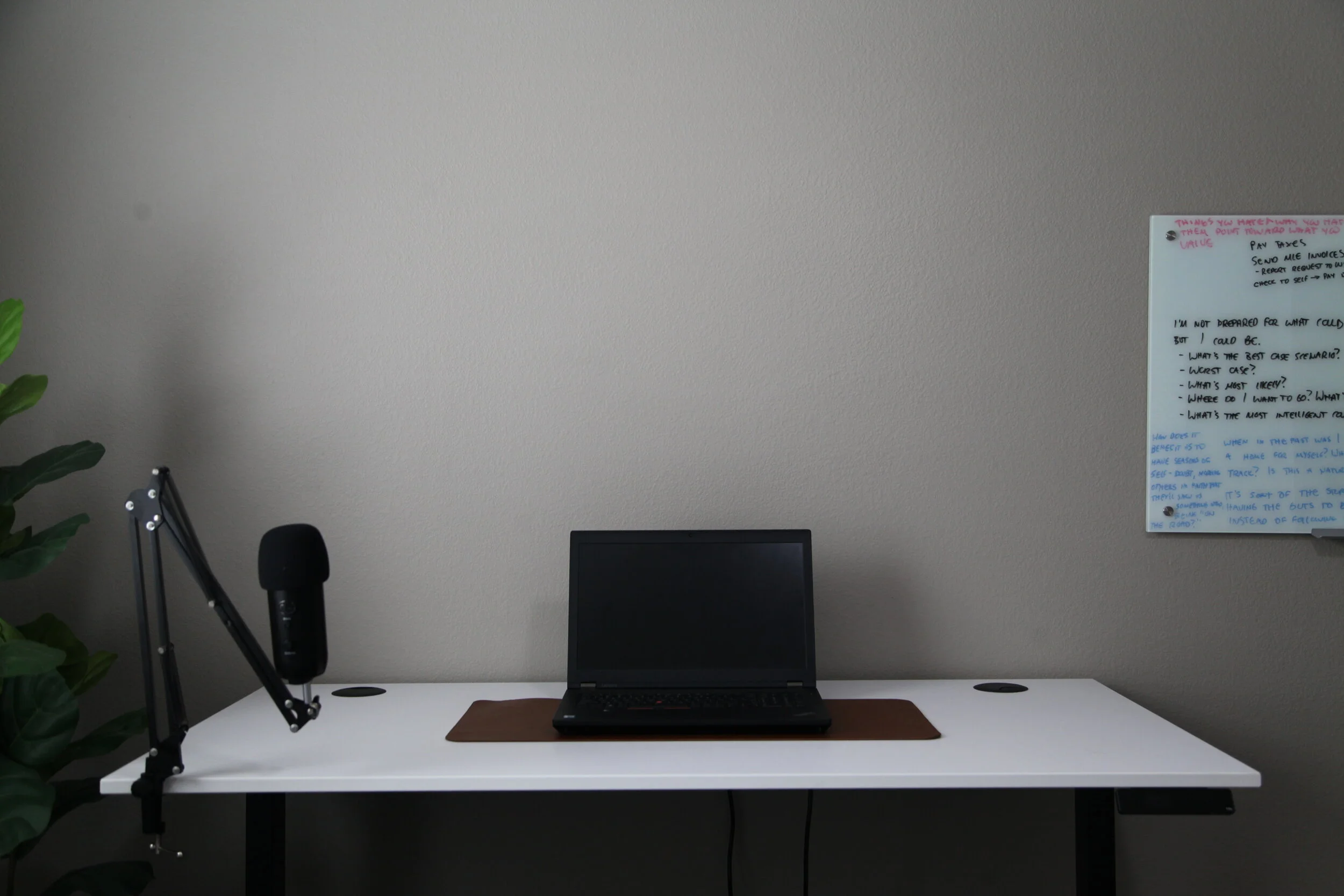
My friend Rachel laughed when she saw my room and said it looked like a hotel.
The comment confused me. Apparently a “hotel room” wasn’t a positive thing – but I was proud of my space! Armed with Jordan Peterson’s admonitions, I had battled the 2020 life-chaos of COVID with disciplined organization: military-corner bedmaking, simple decoration, and zero clutter. I guess flawless order isn’t Rachel’s cup of tea. I shrugged it off.
But then, building this website last week caused me a problem that sent me on a journey and changed the way I think. The home page greets you with, “Welcome to my online home,” a phrase I liked and copied from David Perell. I uploaded a picture and wrote an introduction, but when I reviewed my work, something felt dissonant. I realized that the picture and words on the page did not belong in my online home. But what did?
Hours of introspection later, not only had I created home page content that I loved, but I also felt like I knew myself better. It made me feel good to read the words I wrote because they reflected who I really am, and discovering those words required me to reach a deeper understanding of who I am. Somehow, crafting a piece of my online home brought me a little closer to my identity.
If my online home connects to my identity, what about my physical home? In retrospect, Rachel’s “hotel room” comment convicted me of being disconnected from my identity. She was telling me that my room wasn’t made for anyone in particular. It was clean, but it had nothing to do with me. I didn’t need to know myself to put things in order, but this website proved that I must know myself to create a home.
Maybe I don’t know myself as well as I thought. But by exploring this home idea, maybe I can learn something.
I knew the perfect person to call: My friend alisha. I met alisha pre-COVID at an Austin Chic-Fil-A. She had bouncy hair, quirky earrings, and she looked happy, and getting to know her was a blast because she is such an original. She is both an artist and a computer scientist, prefers spelling her name with a lower-case “a”, and has a mild obsession with carnivorous plants.
alisha’s originality extends to her living space. She once showed me around her room during an intra-quarantine video call, and it felt like getting a tour of the Little Mermaid’s grotto. alisha excitedly introduced me to each object (a golden print of “The Kiss” by Gustav Klimt, a mug with boobs, a little plant potted in a plastic dinosaur), the whole time beaming with the joy of a dancing child.
Not exactly a hotel room.

“Look at this stuff. Isn’t it neat?"
When I asked alisha to explain her decorating philosophy, she told me that she doesn’t think of it as decorating but rather like curating a thought journey that can pricelessly improve life: “The reason people put art in their home isn’t just because it looks pretty. They’re buying a change of thought.”
But that change in thought doesn’t have to be expensive. It could be a dinosaur planter, a mug with boobs, or a note from a friend.
Over time, alisha has crafted a home that delights her at every turn in the simplest ways. When she reaches into the spice rack she organized with her roommates, she thinks, “I love this. We did this. This is so nice.” Then she moves to a different part of her home and has another wonderful experience there.
She thinks about each space’s purpose, how she will feel there, and how she could feel even better. She knows work can be frustrating, so she gathers pictures and objects around her desk that make her feel positive, encouraged, and inspired. She wants to fall asleep with an empty mind, so the wall in front of her bed is blank, “like white noise for your eyes.”
Our conversation made me realize that alisha’s charming quirkiness, her uniquely wonderful home, and her happy confidence all spring from the same source: a well-developed identity. As she gets to know herself, she crafts a better home, and as she crafts a better home, she gets to know herself.
The result is a living museum – the temple of her joyful spirit.
Your uniquely frequent interaction with every detail of your home allows you to create an irreplicable work of art for yourself and discover yourself in the process. You craft your home to feel good, and the decisions that feel good reflect who you are. Asking, “Does this belong in my home?” is another way of asking, “Who am I?” and you fill your home with the answers.
For this reason, a well-crafted home indicates a well-developed identity. Home-crafting is not just about feeling comfortable in your space; it’s about knowing and loving yourself. Once your home is filled with these wonderful little reflections of your identity, entering your space gives visitors the intimate, exciting experience of discovering who you are.
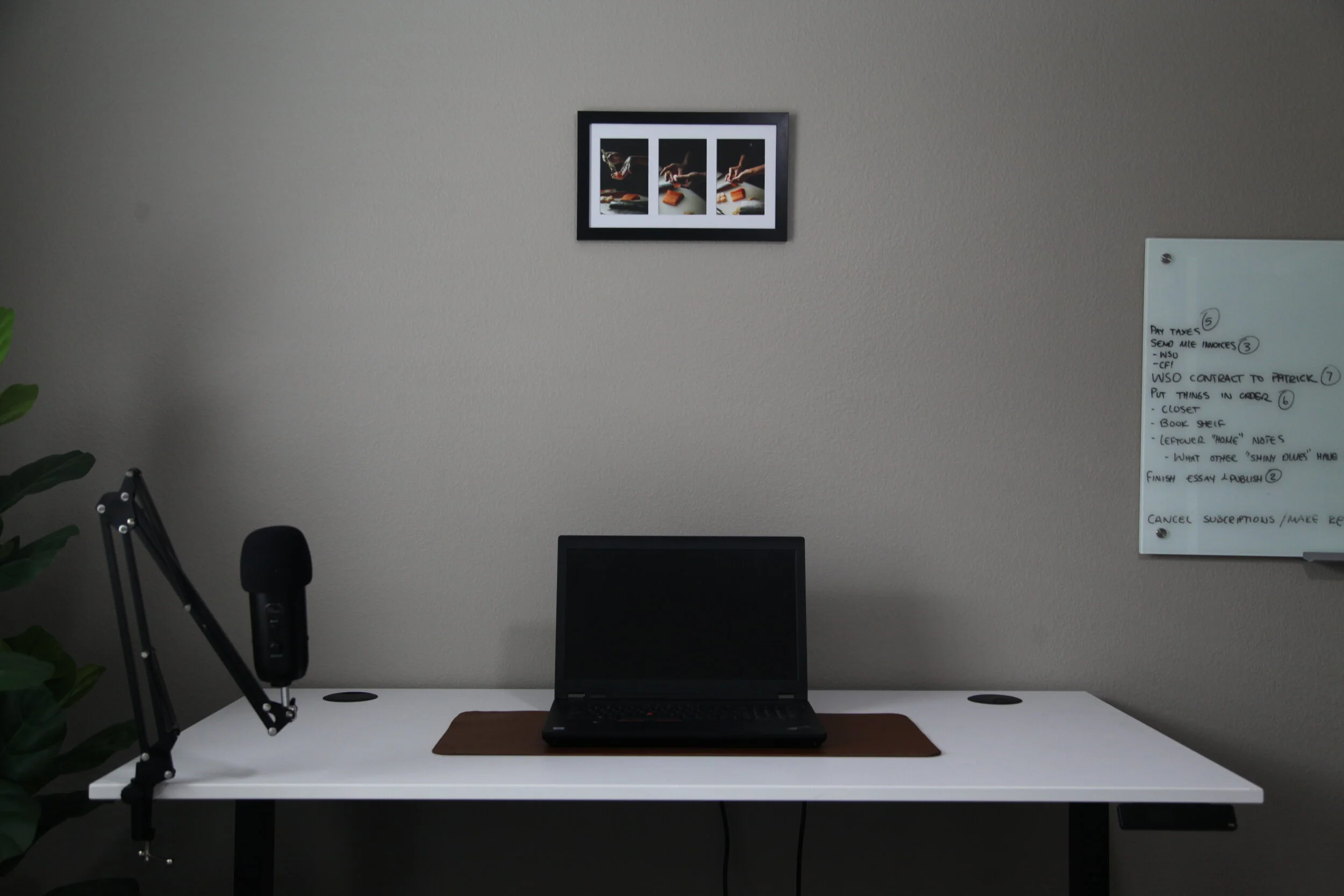
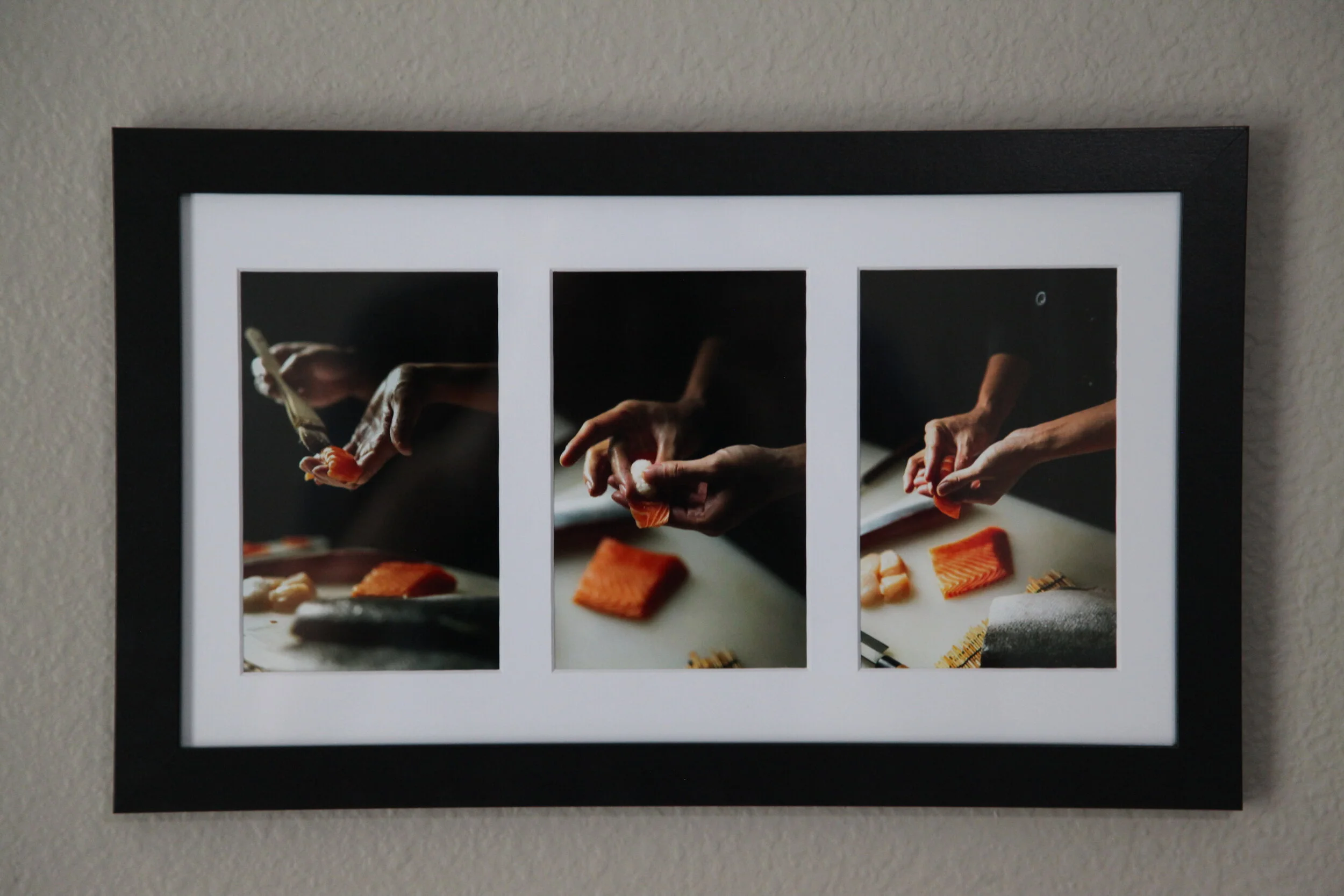
While researching and writing this essay, I developed a sushi metaphor I want to keep in mind while I work. Now I won’t forget:
Thank you alisha, Rachel, Erin, and John for helping me to discover and refine important insights through our invaluable conversations. I learned far more in a week than I could fit into a single essay, and I couldn’t have finished this one without you!